
Demand-Creation vs. Demand-Converting Marketing
My CMO Playbook for Driving Growth

As a Virtual Chief Marketing Officer, I often get asked: “What’s the secret to building a marketing engine that consistently drives growth?” My answer is always the same. It’s about mastering the balance between demand creation and demand converting marketing. These two approaches are fundamentally different, yet deeply interconnected, and understanding how to leverage both has been a game-changer in my career.
Today, I want to share with you how I think about these two pillars of marketing, why they matter so much, and how I’ve used them to build predictable pipelines and fuel business success.

Lighting the Fire: What Demand-Creation Marketing Means to Me
Demand creation is where the magic begins. It’s the creative, visionary side of marketing where I get to introduce new ideas, educate the market, and build awareness around problems that customers might not even realize they have yet.
When I’m working on demand creation, I’m thinking big picture. I’m not just selling a product, I’m shaping how people see the world. This means crafting stories that challenge assumptions, spotlight emerging trends, or even create entirely new categories. It’s about planting seeds of curiosity that will grow into demand down the line.
For example, I’ve launched campaigns that focus on why a problem matters before jumping into how our product solves it. I’ve invested in thought leadership articles, podcasts, and influencer partnerships that don’t just talk about features but tell compelling stories that resonate deeply with audiences.
I know demand creation is a long game. The ROI isn’t always immediate or easy to measure, but the payoff is huge. It expands the total addressable market and positions our brand as a trusted authority. When done right, it creates a wave of interest that sales teams can ride for months or even years.
Fanning the Flames: The Power of Demand-Converting Marketing
Once I’ve sparked interest, my focus shifts to demand conversion, so the part of marketing where the rubber meets the road. This is where I work to turn curiosity into commitment by nurturing leads who are already aware of their needs and actively evaluating solutions.
Demand converting marketing is tactical and data-driven. I rely heavily on targeted email campaigns, personalized content, webinars, demos, and optimized landing pages. My goal here is to make the buying process as seamless and compelling as possible.
I’m constantly analyzing conversion rates, pipeline velocity, and ROI to fine-tune these efforts. For me, demand conversion is about removing friction and answering every question a prospect might have. It’s about building trust and confidence so that when they’re ready to buy, we’re the obvious choice.
Why I Can’t Choose One Over the Other
I’ve seen companies pour all their resources into demand conversion, chasing hot leads, optimizing campaigns, and squeezing every drop of ROI from existing demand. But without demand creation, they end up fighting over a shrinking pool of buyers, often at escalating costs.
On the flip side, focusing only on demand creation without a solid conversion strategy means you’re generating interest but not closing deals. It’s like filling a bucket with holes.
For me, the real magic happens when I orchestrate both demand creation and demand conversion in harmony. Demand creation fills the top of the funnel with fresh prospects, and demand conversion guides those prospects down the funnel to become loyal customers.
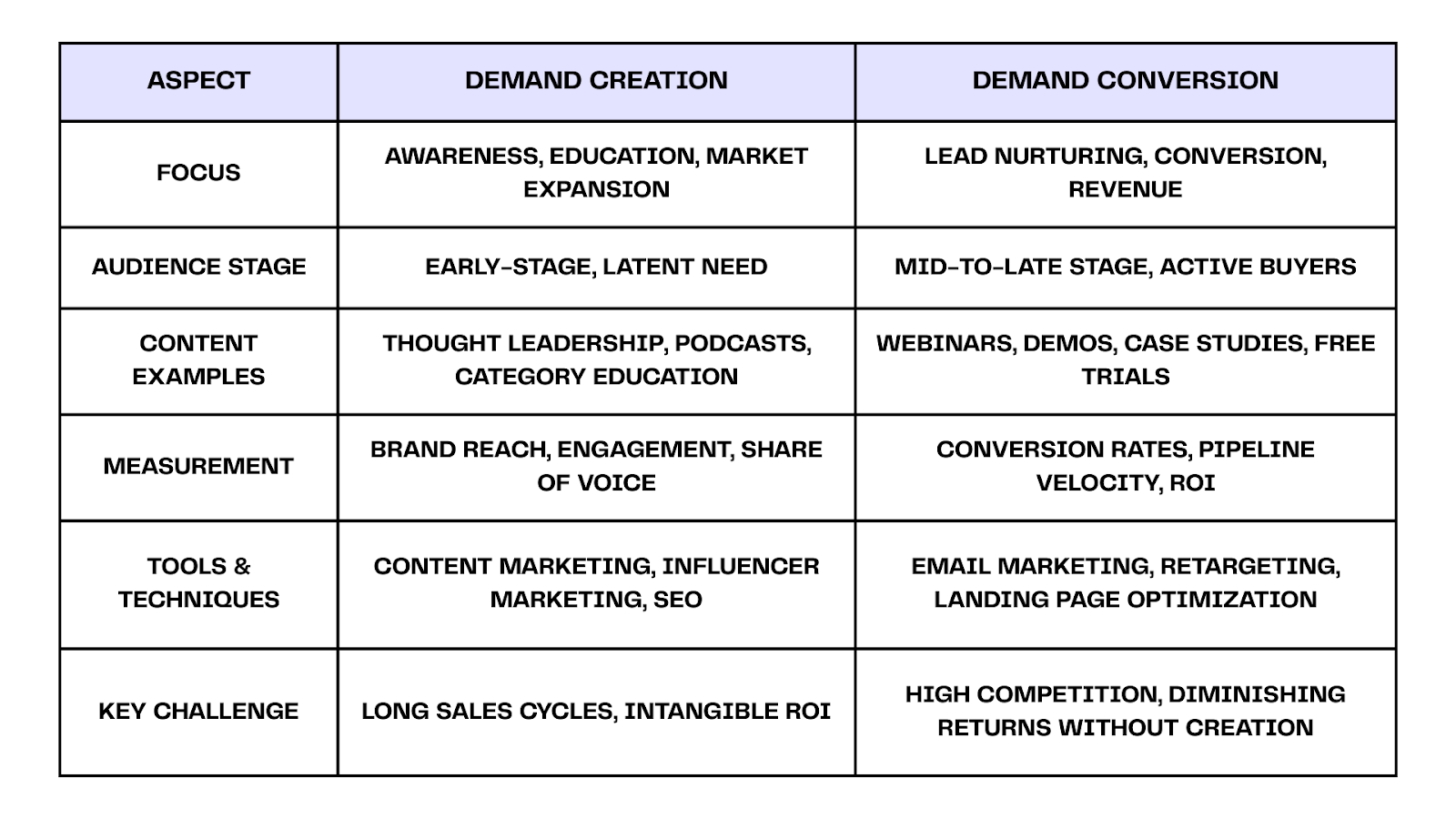
How I Approach Demand Creation vs. Demand Conversion: A Quick Breakdown
Real-World Lessons I’ve Learned
Storytelling is the heart of demand creation. When I focus on telling authentic stories that resonate, I see engagement soar. People don’t just want products; they want to feel understood and inspired.
Data drives demand conversion. I rely on analytics to understand where prospects drop off and what messaging moves the needle. Personalization is key, generic campaigns just don’t cut it anymore.
Patience and persistence pay off. Demand creation takes time. I’ve learned to be patient and keep nurturing the market while simultaneously optimizing conversion tactics.
Aligning sales and marketing is non-negotiable. I make sure our sales teams are in sync with marketing efforts so that when leads come through, they receive consistent, relevant messaging that closes deals.
Final Thoughts: My Advice to Fellow CMOs

If you want to build a marketing engine that truly drives growth, don’t just chase the quick wins of demand conversion. Invest in demand creation to expand your market and shape buyer behavior. Then, double down on demand conversion to turn that interest into revenue.
This isn’t an either-or game. It’s a dynamic partnership. When I get this balance right, I’m not just hitting quarterly targets; I’m building a brand and a business that can thrive for the long haul.
So, light the spark with bold, creative demand creation and fan those flames with smart, data-driven demand conversion. That’s how I make marketing magic happen.